
My Go-To Websites: The Ultimate STEM Student Toolkit
Hey Nerds! ✨
Tackling STEM subjects can be tough, sometimes frustrating, but incredibly rewarding if you have the right tools. Over the years, I’ve built up a personal arsenal of online resources that have saved my life (and my GPA) on more than one occasion. Today, I’m sharing the sites that are permanently parked in my bookmarks bar, always ready for any study emergency.
Let’s get started.

PhET Interactive Simulations
What it is in one sentence:
A collection of interactive simulations that allow you to get a hands-on feel for concepts in physics, chemistry, biology, and math.
Why I love it:
I discovered this site thanks to my high school math and physics teacher, someone I’ve always looked up to. One day, with his endless passion for the subject, he surprised us with a different kind of lesson where we explored the countless activities on this site together. Understanding formulas and abstract theory is one thing, but it’s only when you put things into practice and experience the dynamics yourself that you truly grasp what’s happening.
Recommended for:
High school and early university students who find it hard to visualize abstract concepts.
My Favorite Simulations:
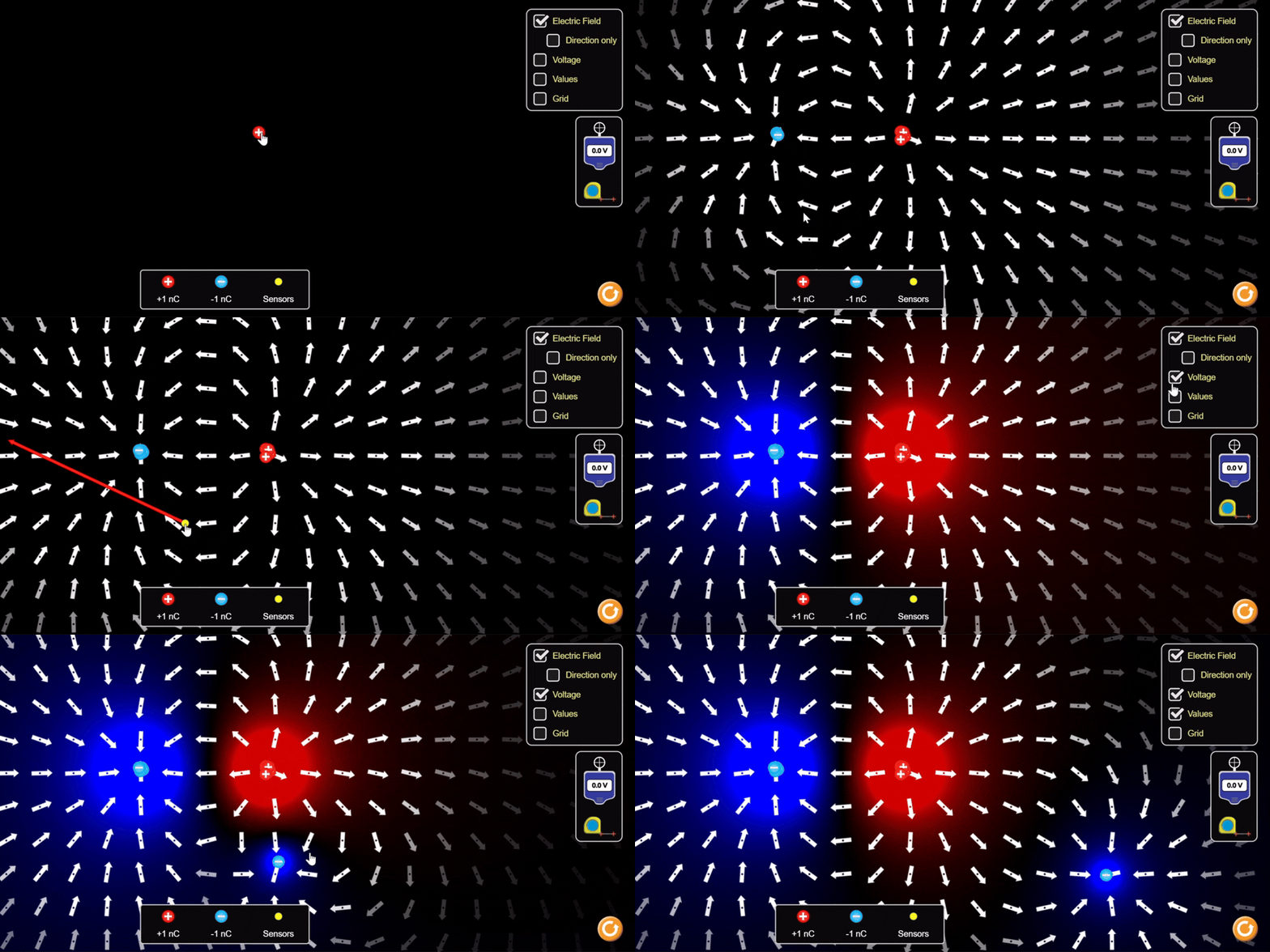
- Electric Field Representation: I confess I’ve used this while solving some particularly difficult electromagnetism problems. You just move the charges into the configuration you need and see what happens to the field at various points, especially when there are interesting symmetries. It also has simulations to verify electromagnetism laws, Faraday’s Law, magnets, etc.
- Quantum Measurement: For anyone starting out with Quantum Mechanics, any tool that helps clear the fog of abstract notions is a miracle! In this simulation, you can compare a classical coin with a quantum one, even setting the probability for each of the two states. You can also simulate the Stern-Gerlach experiment and visualize the Bloch sphere.
- Simulations for Mechanics and Waves: There are great resources to verify the laws of mechanics, understand oscillations, and see how waves behave.
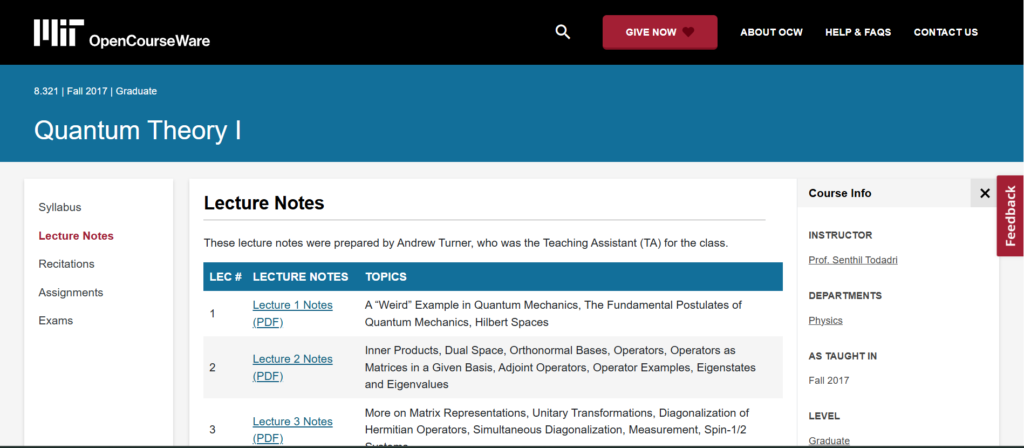
MIT OpenCourseWare
What it is in one sentence:
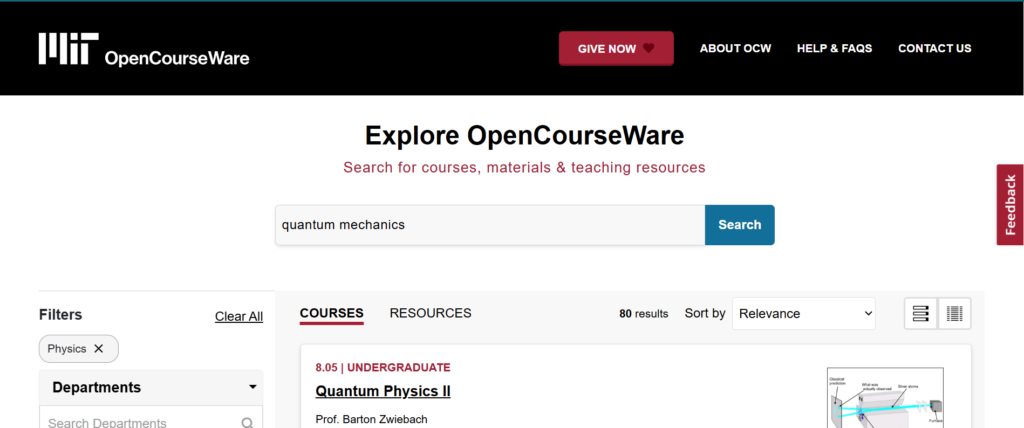
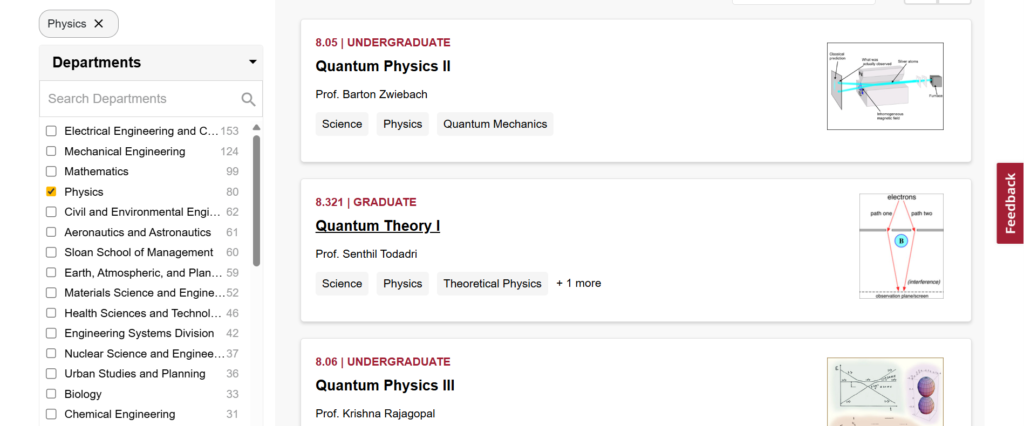
A platform where MIT shares educational materials from its own undergraduate and graduate courses.
Why I love it:
You can follow entire courses and learn a huge amount. I have used—and still use—this site a lot. At the start of every semester, when I have new courses, I come here to look for resources, notes, and problem sets. I believe that when you’re studying complex subjects, it’s useful to consult as many sources as possible, as it’s very likely you’ll understand a specific concept better when it’s explained in someone else’s words.
Recommended for:
University students at all levels looking for high-quality, in-depth course materials.

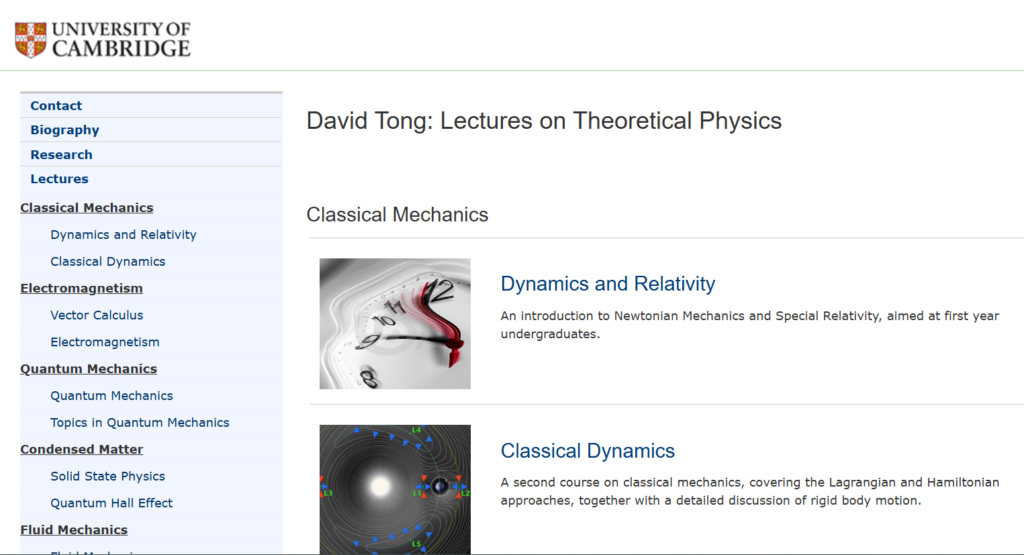
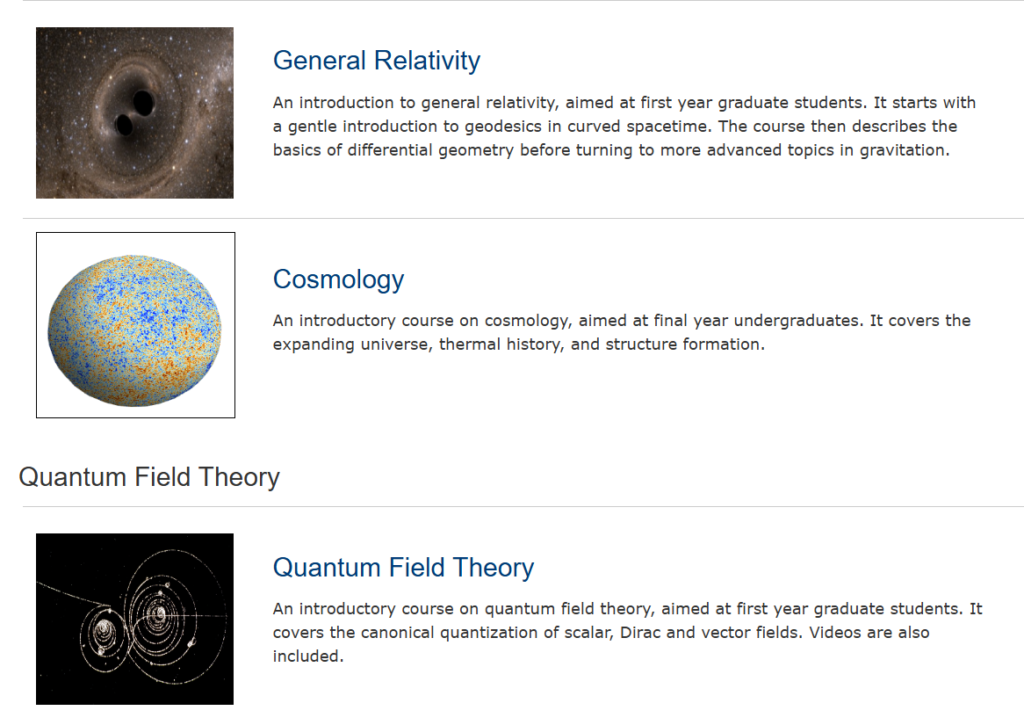
David Tong: Lectures on Theoretical Physics
What it is in one sentence:
A comprehensive collection of lecture notes and example sheets on nearly all the foundational topics of theoretical physics, curated by a Cambridge University professor.
Why I love it:
Everything I said about the MIT OpenCourseWare resources applies here too! It’s an incredible resource. Go take a look.
Recommended for:
Specifically for university-level physics students.
Lumen Learning
What it is in one sentence:
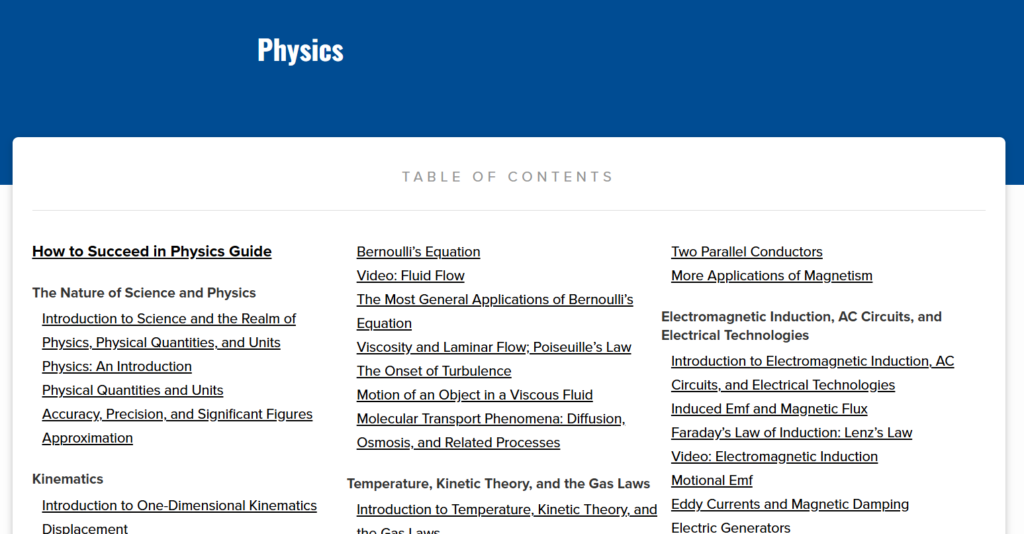
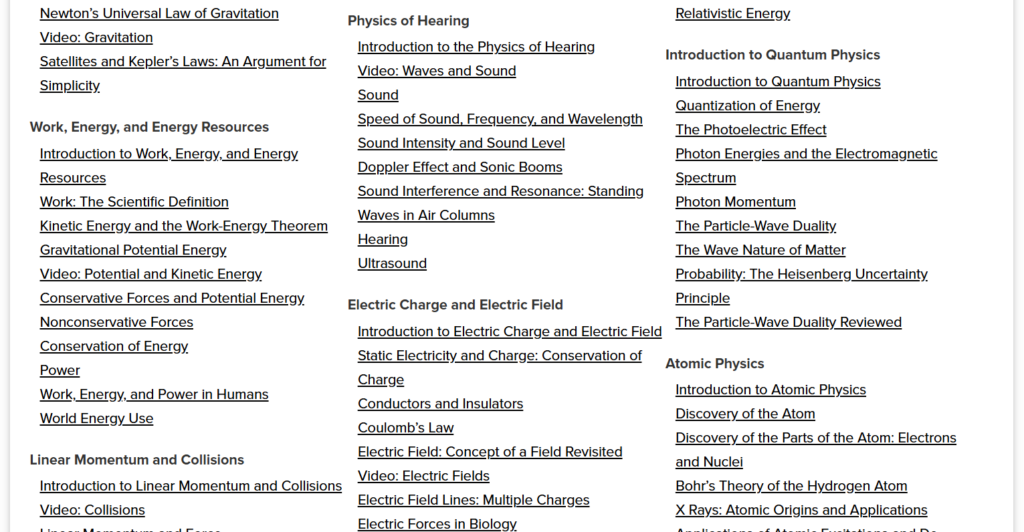
An accessible, easy-to-navigate online textbook that covers all the basic topics in physics.
Why I love it:
As you can see, it covers all the fundamental topics of physics, not in a complex way, but in an extremely accessible manner, even for high school students. It’s a great place to get a clear and simple overview of a new topic.
Recommended for:
High school students or anyone looking for a straightforward introduction to core physics concepts.
And that’s just the beginning.
These are the foundations of my digital toolkit. I hope they can become just as valuable for you.
But now, over to you:
What are your lifesaver websites?
Are there any hidden gems I missed?
Drop them in the comments below!
🖖🏼
Leave a Comment
You must be logged in to post a comment.